Discovery 1
Spiny lobsters form traveling queues
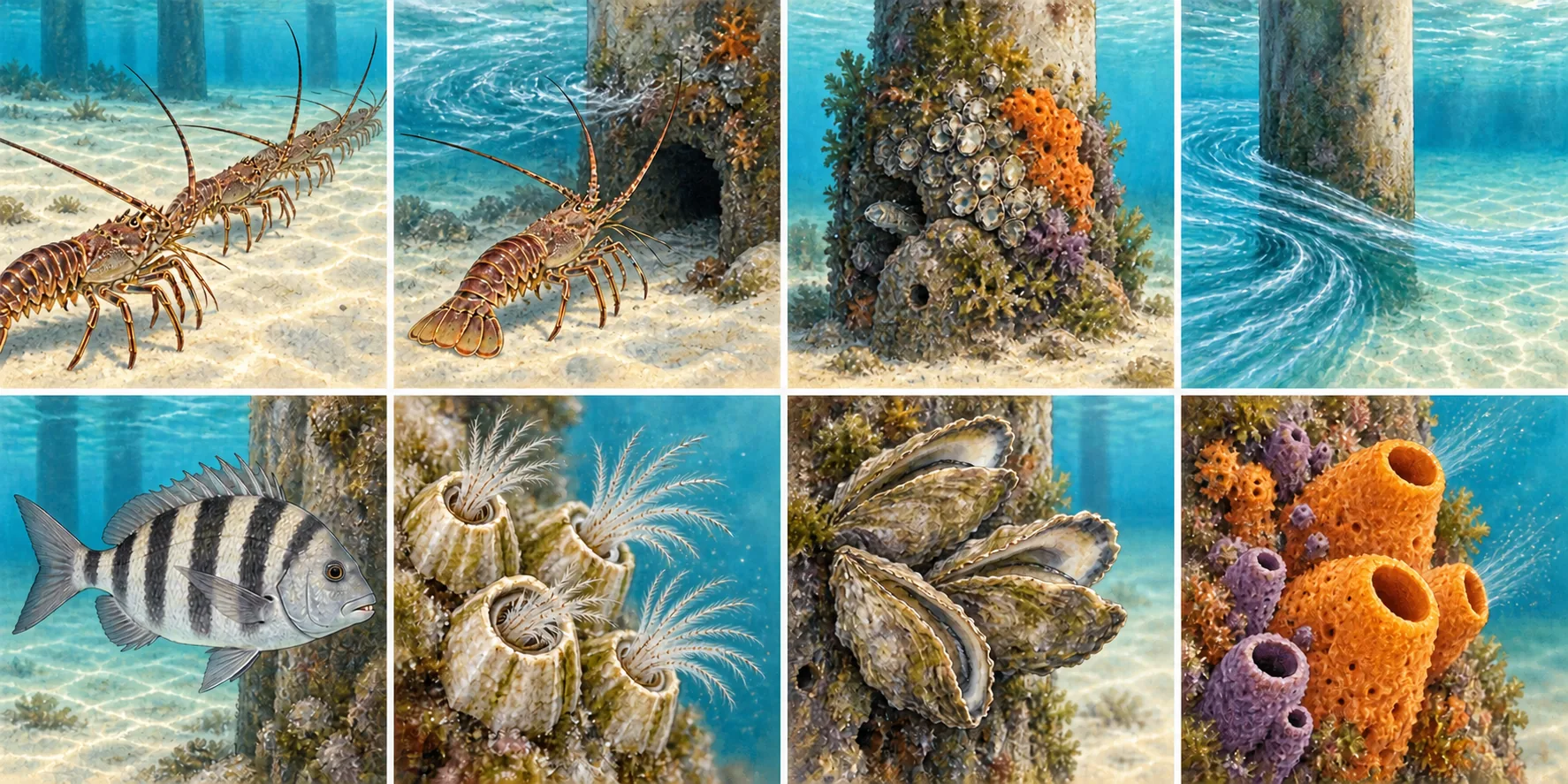
Caribbean spiny lobsters can migrate together in long single-file lines.
In the adventure: Scout keeps the group together as they cross the open channel.
Open scientific source
Book 5 environment
Follow a remarkable lobster march beneath bridge pylons that have become a reef-like neighborhood.
Real-world discoveries from the adventure
Discovery 1
Caribbean spiny lobsters can migrate together in long single-file lines.
In the adventure: Scout keeps the group together as they cross the open channel.
Open scientific sourceDiscovery 2
Cooling water and approaching storms can help trigger a mass movement toward deeper habitat.
In the adventure: Scout’s line moves toward protected structure before the roughest water arrives.
Open scientific sourceDiscovery 3
Underwater concrete gives reef life hard surfaces to grow on and crevices to shelter in.
In the adventure: The pylons have become Stripes’s living neighborhood.
Open scientific sourceDiscovery 4
Underwater structures can redirect flowing water and create calmer sheltered pockets nearby.
In the adventure: Ripple finds the softer path that helps the smaller lobsters reach safety.
Open scientific sourceDiscovery 5
Sheepshead use incisors and rows of molars to scrape and crush shelled animals.
In the adventure: Stripes clears just enough shell growth to open the sheltered crevice.
Open scientific sourceDiscovery 6
Feathery appendages called cirri comb tiny food from the passing water.
In the adventure: The crunchy pylon covering is alive and feeding in the current.
Open scientific sourceDiscovery 7
Oysters pump water across their gills and capture plankton suspended in it.
In the adventure: The shell cluster near the crevice is part of the bridge community.
Open scientific sourceDiscovery 8
Water flows through a sponge’s pores and canals, bringing food and oxygen and carrying waste away.
In the adventure: The colorful growth on the pylon is quietly pumping water all day.
Open scientific source